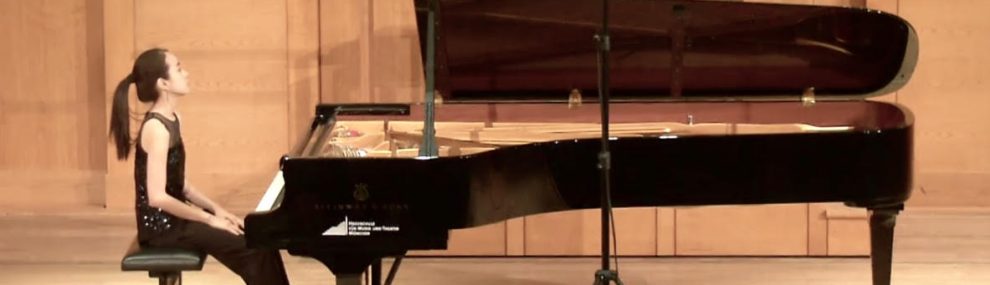
It has been my prayer since 5th grade in elementary school. I remember writing a poem about my dream, expressing my desire to become a musician who touches people’s hearts and heals them through my music, so that pain would no longer exist in the world, or something along those lines. (I will post the poem when I return to Korea next week.) That small passion in the heart of a 5th-grade girl has grown wider and deeper over the years, becoming the sole passion of a 22-year-old musician.
When I listen to songs, they deeply touch me, especially the breaths that occur between the words. The breath speaks and reveals much of one’s heart. While it may not explain everything, it speaks the truth. This is one reason why I love listening to songs. It’s not that I don’t focus on the lyrics, but I am always captivated by the voice of the breath more than the lyrics themselves.
So, what do I find passion in during piano performances? As everyone says, the instrument itself is the voice of the performer’s heart and the story of the music. Sometimes, it is challenging. One thing I have struggled with and continue to learn is what music encompasses and how I can bring healing to others through music. I am often told by my teacher that although I am musically sensitive and emotional, my technique is not sufficient to confidently express my unique emotions. This has been my weakness as I strive to become a professional musician for years.
A few years ago, I had a rather interesting performance. It was my recital, and I was gripped by the sadness I sensed in the music. I had no idea how I performed; all I remembered was the overwhelming emotion. Experiencing such a powerful spirit in my heart allowed me to see a new world of music. I was happy. I didn’t know exactly what it was, but I was excited to have received another new thrill in my heart during the performance.
However, after the performance, I received the harshest feedback from people. My teacher, mother, and friends asked, “Did you practice enough?” “Were you nervous?” “Were you out of your mind?” I was in shock. I had no idea that I had played wrong chords and scales, which was completely unprofessional and unacceptable, especially at a concert or competition. I learned that whatever thrill had entered my heart, it was not right for the performance.
Although I was greatly confused, I realized one thing: emotion is not everything in music. You need to be prepared to merge your emotion with your body through hours of practice, focusing and listening to each and every note, and being able to free your fingers from control. Without a plan or understanding, you cannot simply feel the music. Feeling the music without knowing where you are going is a personal pleasure, but it may not resonate with others. Singers, for example, share the story of music through their lyrics and voice, representing the truth of their sound and heart with confidence. Similarly, as performers, we have the right to express our emotions, but we must also be aware of the composer’s intentions, the character of the piece, and its underlying story.
I believe that technical uneasiness can be resolved through hours of practice. Everything I have mentioned can be improved with endless dedication and time, but one’s emotion cannot be effectively conveyed if the performer is not ready to share their passion or does not grasp the essence of the composition. Having a certain level of emotional sensitivity is a precious gift for a performer, one that leaves an indelible mark on their heart.
Through acknowledging my weaknesses and misunderstandings, I am constantly challenged to spend a considerable amount of time refining my technique. This will allow me to project my sound with the freedom of emotion, not just for my own musical improvement, but also to fulfill my dream of touching and healing others through music. I am grateful for the opportunity to learn these lessons early on in my career as a concert pianist. I do not wish to keep my passion and voice hidden in my heart, allowing it to fade away. Instead, I aspire to eventually pour out all my passion without hesitation or uneasiness. As I learn and grow, my fire burns brighter and stronger. It will never die; rather, it will become more resolute and courageous. I yearn for more experiences, more knowledge, and a deeper and broader passion.
Above all else, I play the piano to praise God, just as angels sing for His glory.
 musicthattouchesyoursoul